

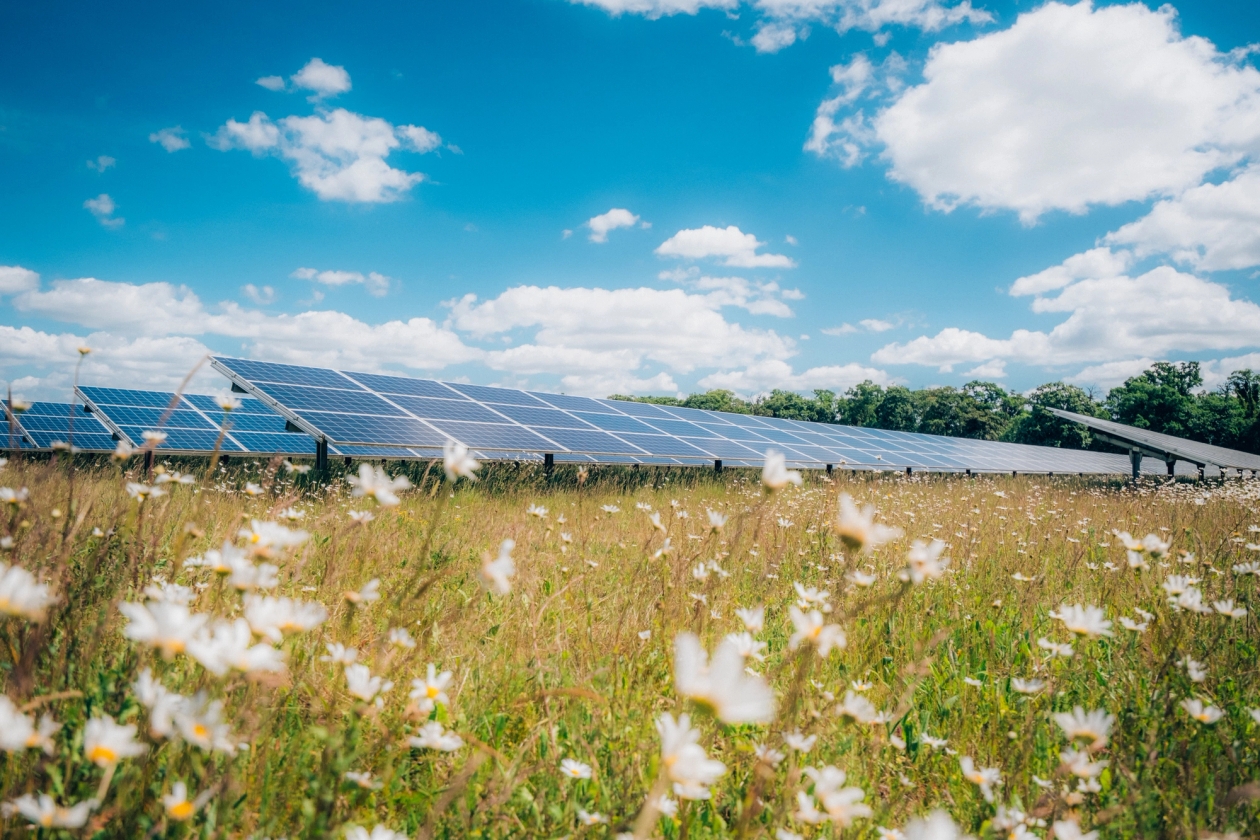
Low Carbon launches Dengie Peninsula Energy Park in Essex
Leading UK renewable energy company, Low Carbon, has confirmed that it has begun developing proposals for Dengie Peninsula Energy Park, a new solar and energy storage project located on land near the villages of Bradwell-on-Sea, Dengie and Burnham-on-Crouch in Essex.
With a potential capacity of 1 GW, Dengie Peninsula Energy Park could generate enough clean electricity each year to power the equivalent of more than 250,000 UK homes while avoiding up to 265,000 tonnes of CO₂ emissions annually.
Alongside the infrastructureneeded to export electricity to the grid, the proposed development will include environmental mitigation and areas for biodiversity enhancement that will be designed in response to constraints and opportunities identified through ongoing assessments.
The project will be developed through an environment-led design approach that responds to its surrounding environment and to local communities. Environmental surveys, technical assessments and feedback from local communities and other stakeholders will inform the design of the project and the Environmental Impact Assessment.
Over the coming months, Low Carbon will be engaging with the local community, landowners, local authorities and statutory consultees to gather feedback on the emerging proposals. A wider public consultation is then planned for early 2027 that will allow a further opportunity for local stakeholders to review to provide feedback.
Ed Perrin, Project Development Director at Low Carbon, said:
"Dengie Peninsula Energy Park has the potential to play an important role in delivering the clean, secure and affordable power the UK needs, combining large-scale renewable electricity generation with energy storage to support a more resilient and flexible power system.
"We are still at an early stage in developing the project and are committed to engaging openly with local communities, businesses and stakeholders throughout the process. Listening to local views and gathering feedback will be essential in helping us to understand community priorities and refine our proposals as they evolve.”
As the proposed development would have a generating capacity exceeding 100 MW, it is classified as a Nationally Significant Infrastructure Project (NSIP). An application for a Development Consent Order (DCO) will be submitted to the Planning Inspectorate, with the consent determined by the Secretary of State for Energy Security and Net Zero, Miatta Fahnbulleh.